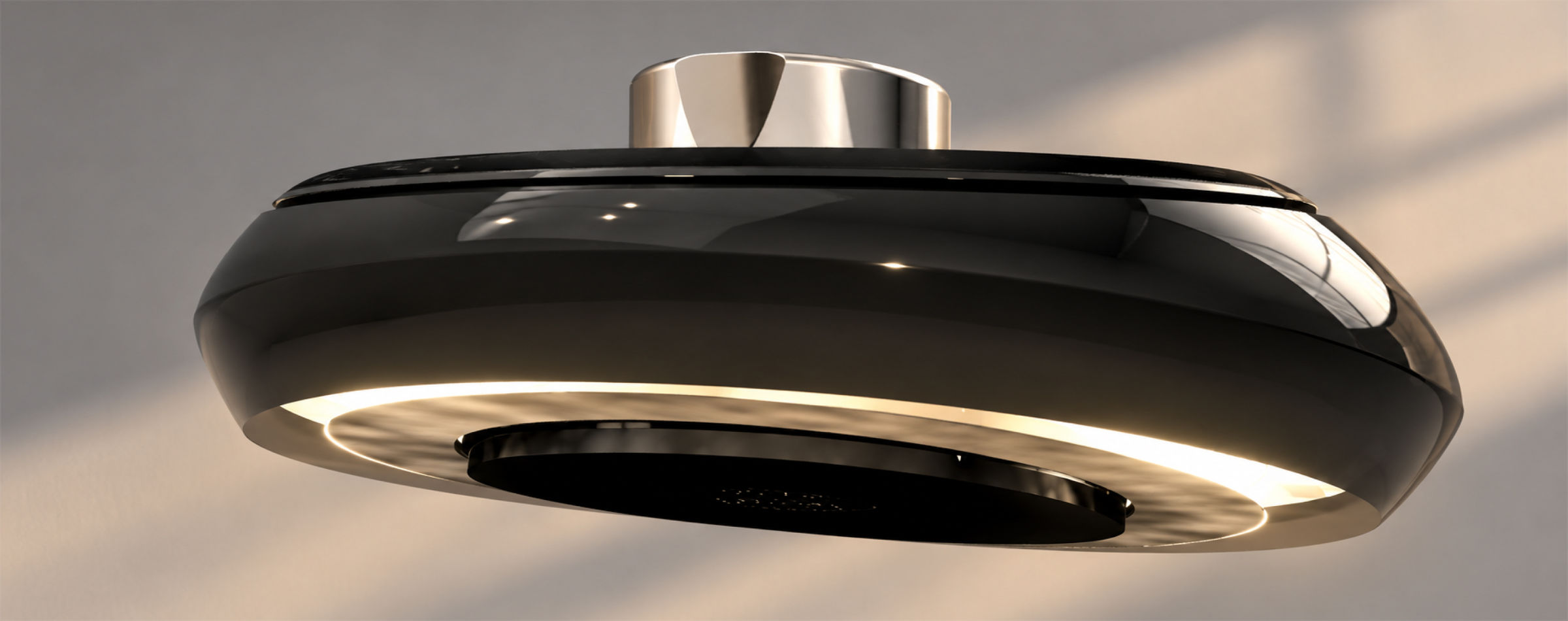
Pebble
A ring you wear and a stone that stays home. Your room answers your body, without another screen.
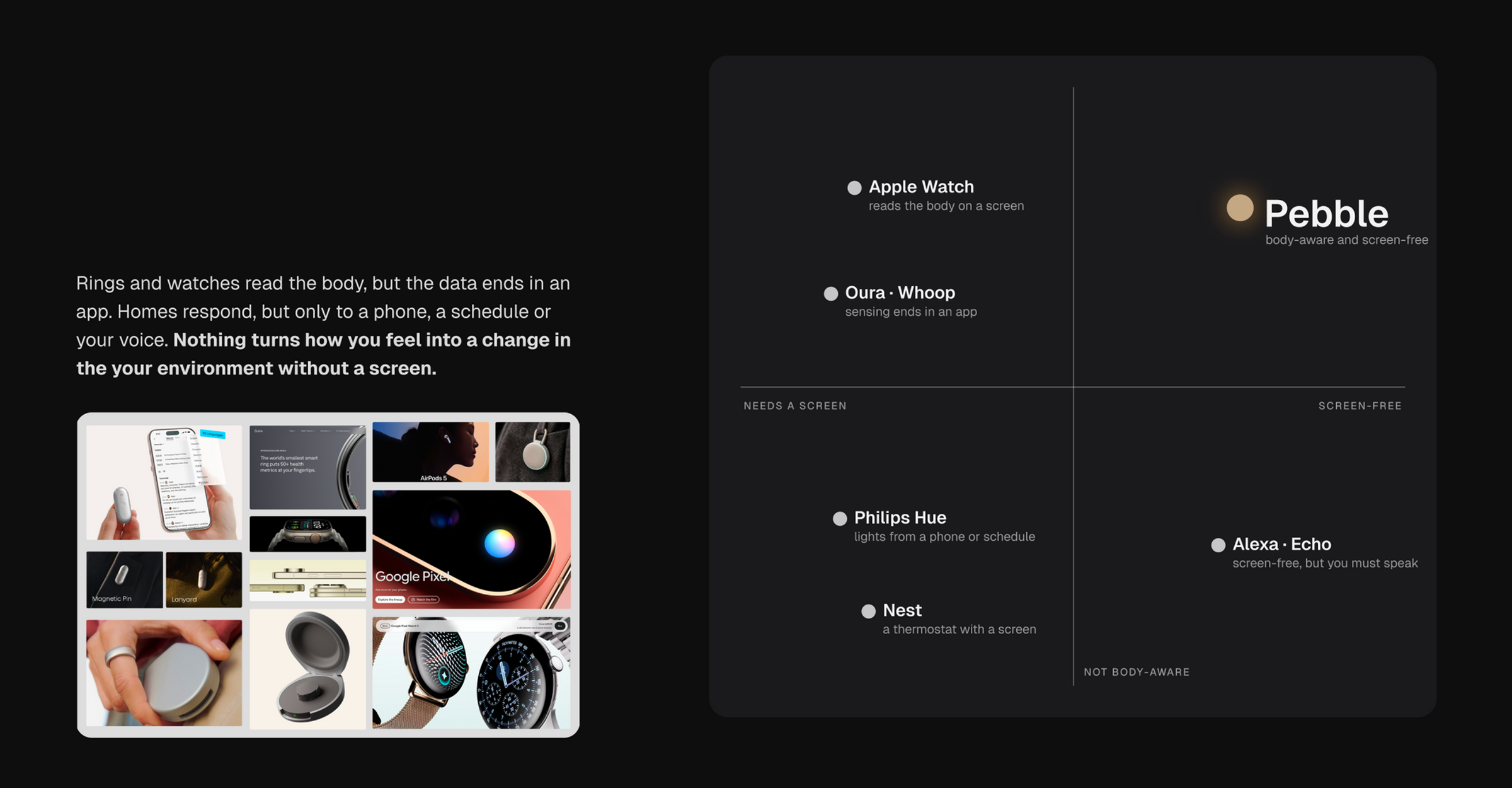
Rings and watches read the body, but the data ends in an app. Homes respond, but only to a phone, a schedule or your voice. Nothing turns how you feel into a change in your environment without a screen.
Aug 31 – Nov 18, 2026
Hardware Interaction Designer · sole designer on the team
Industrial Design capstone · Fall 2026
Fusion 360 · Figma · XIAO ESP32-C6 · Bambu 3D printing
7 of 8 people changed the light with no instructions · 4.8 / 5 satisfaction
How might physical objects give people back the boundaries their screens erased?
The AI proposes. Your touch decides.
Home from work, but the room is still at work.
The ceiling light is still on full, set for the focus time she needed at three. Changing it means another app, another screen, or getting up, so the room stays bright and the evening never quite starts.
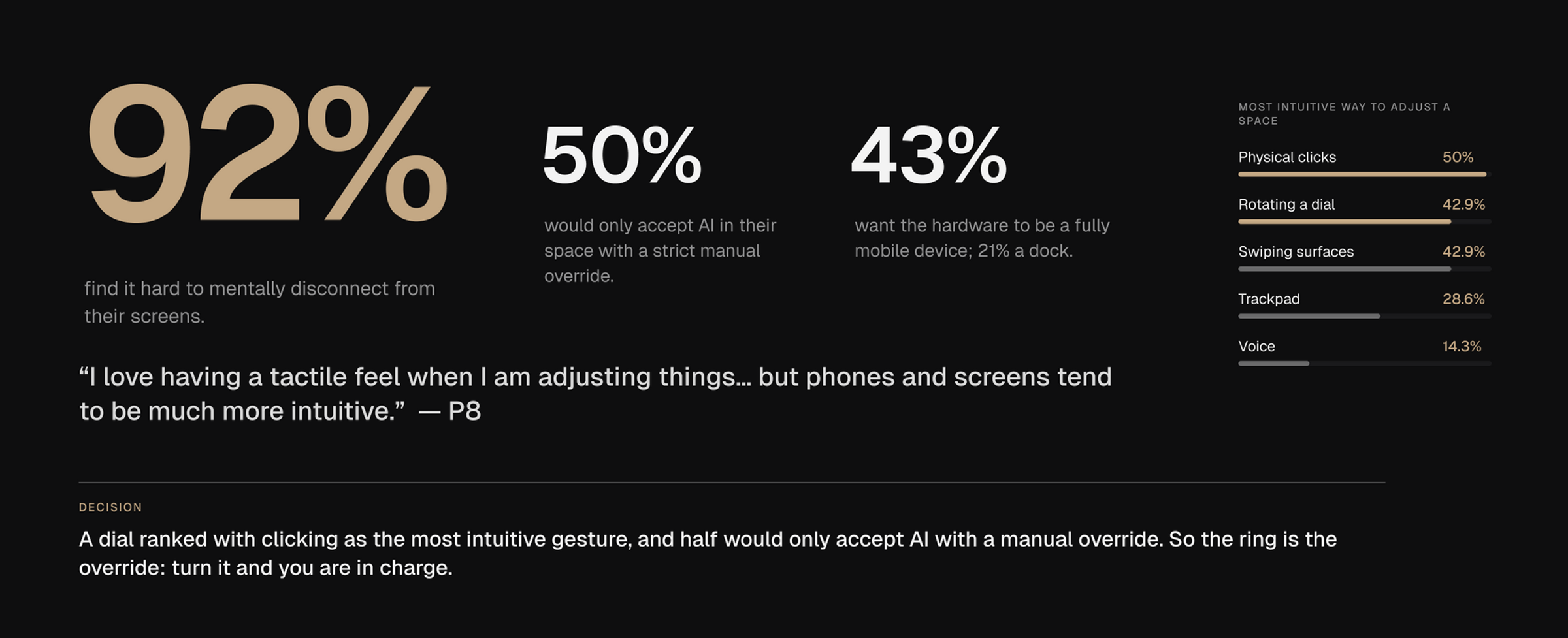
Fourteen users, one pattern.
A dial ranked with clicking as the most intuitive way to adjust a space, and half would only accept AI with a strict manual override.
So the ring is the override: turn it and you are in charge.
Between smart rings and smart homes.
Body-aware products need a screen; screen-free ones can’t read the body. Pebble sits in the empty corner: body-aware and screen-free.
Feel like an object, not a gadget.
Pebble reads your body through a screen-less object and tunes your room to your mood, so you can change mental state without reaching for a screen. I scored the final design against 11 must, should and could criteria: 8 met.

A pebble you hold in one hand.
The first idea was a palm-sized puck: a thumb indent with a touch pad, a halo of light, and three modes (focus, rest, connect) switched by swipe, tap and hold.

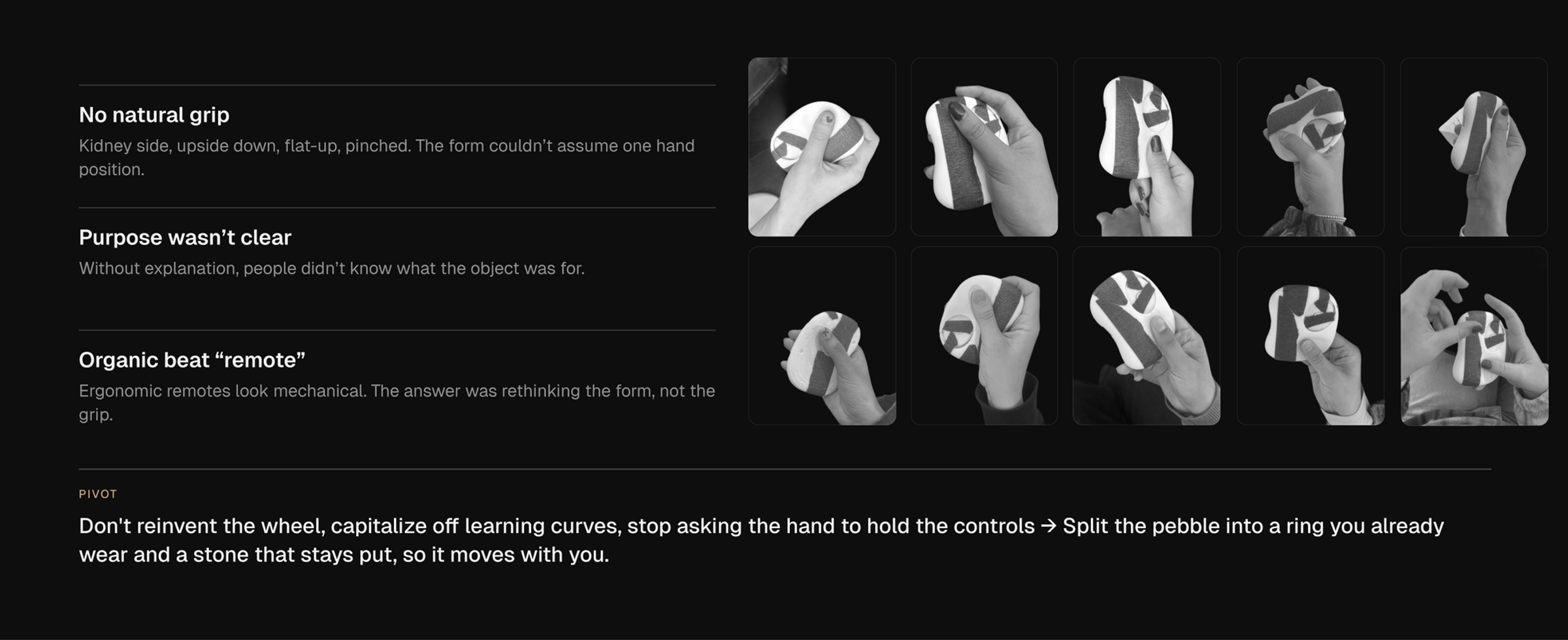
Everyone held it differently.
Classmates tested the print at their desks, mid-task. No one held it the same way, and without explanation no one knew what it was for.
Don’t reinvent the wheel. Stop asking the hand to hold the controls, and split the pebble into a ring you already wear and a stone that stays put.
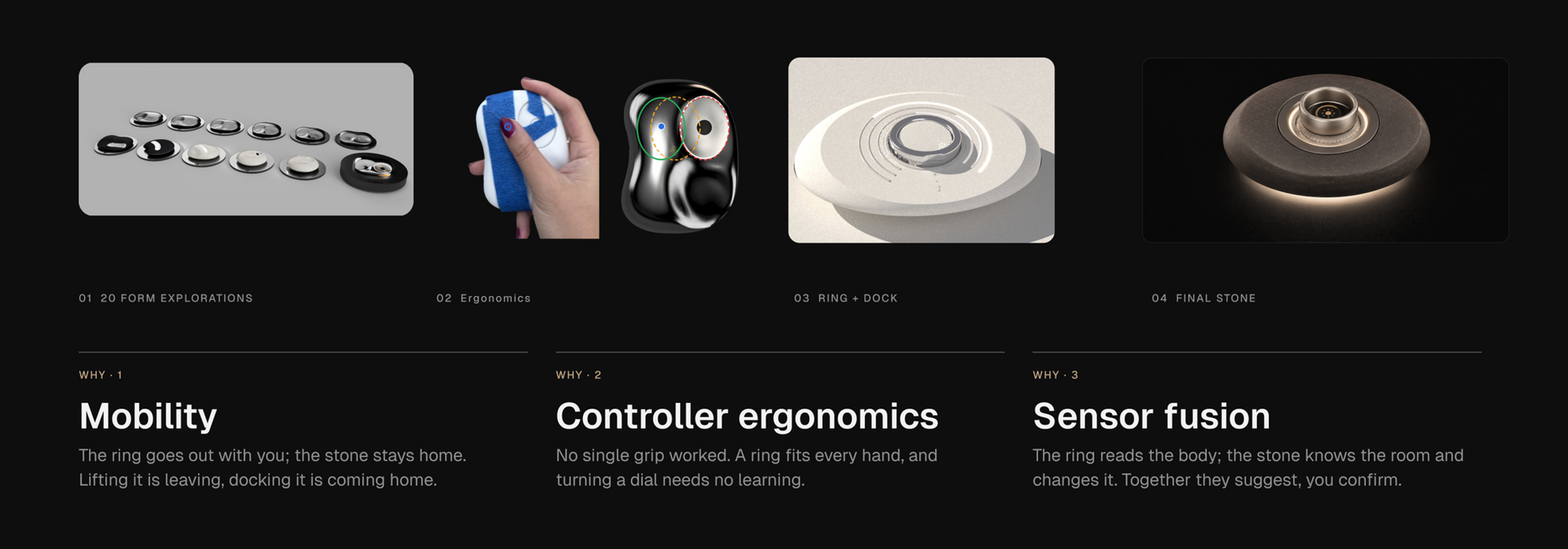
One object became two.
20 form explorations led to a ring you wear and a stone that stays home. Lifting the ring is leaving; docking it is coming home.
Ring, dock, app.
Pebble reads how your body is doing through a ring, suggests a scene for your home, and changes nothing until you touch it. Turn the ring for brightness, tap for on and off.

Any ring, one cone.
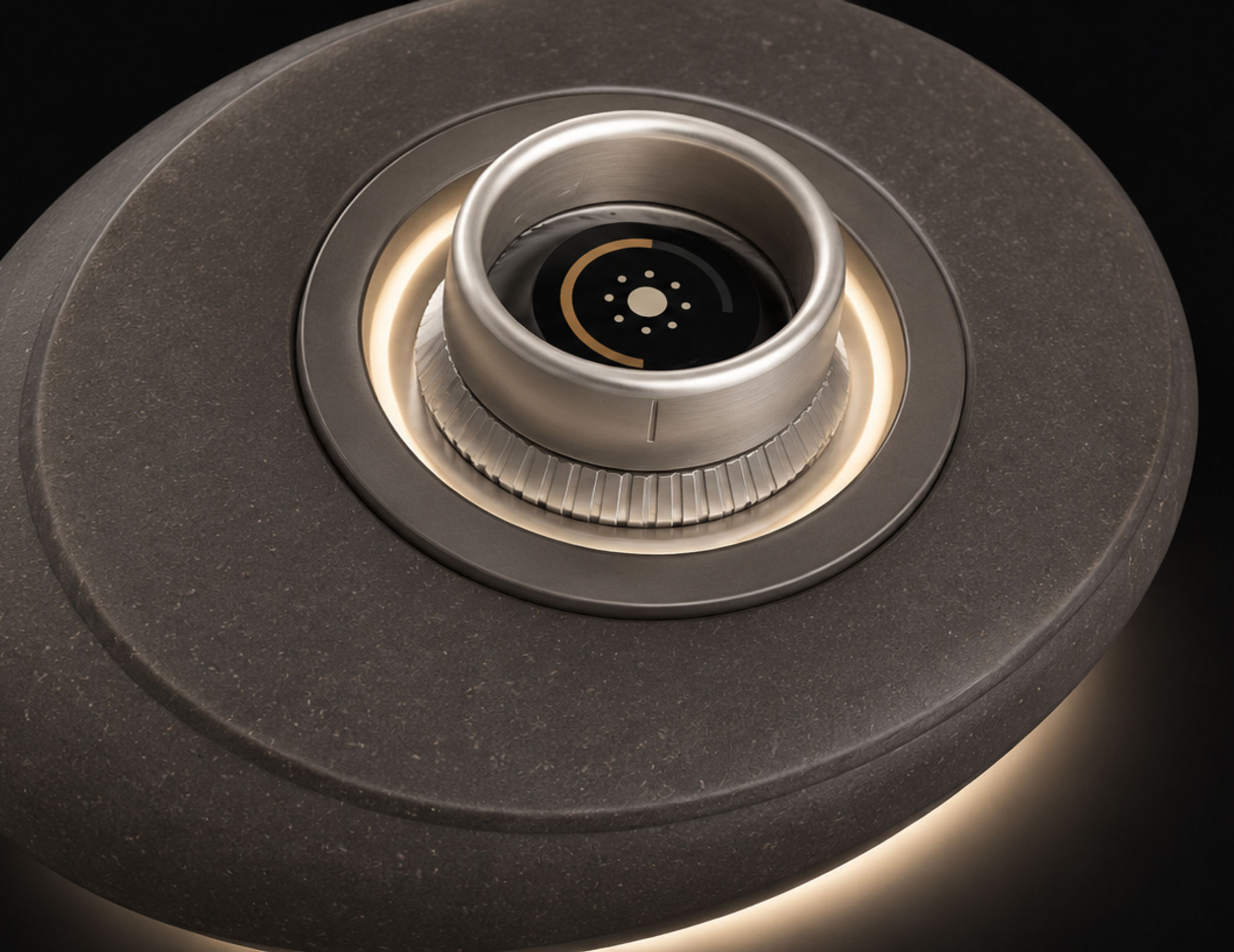
A jeweler’s-mandrel taper seats every ring size, over a rotary encoder that turns the ring into a brightness dial and a 24-LED halo.
Any ring from US 5 to 13 seats in the same cone, and turning a dial needs no learning, so there is no single grip to get right.

3D printed, sanded, soldered, painted.
An ABS print on a Bambu, sanded, painted, wired and lit: dock 90.7 × 78.1 × 28 mm, a Ø14 mm round OLED, a 2700 K halo.
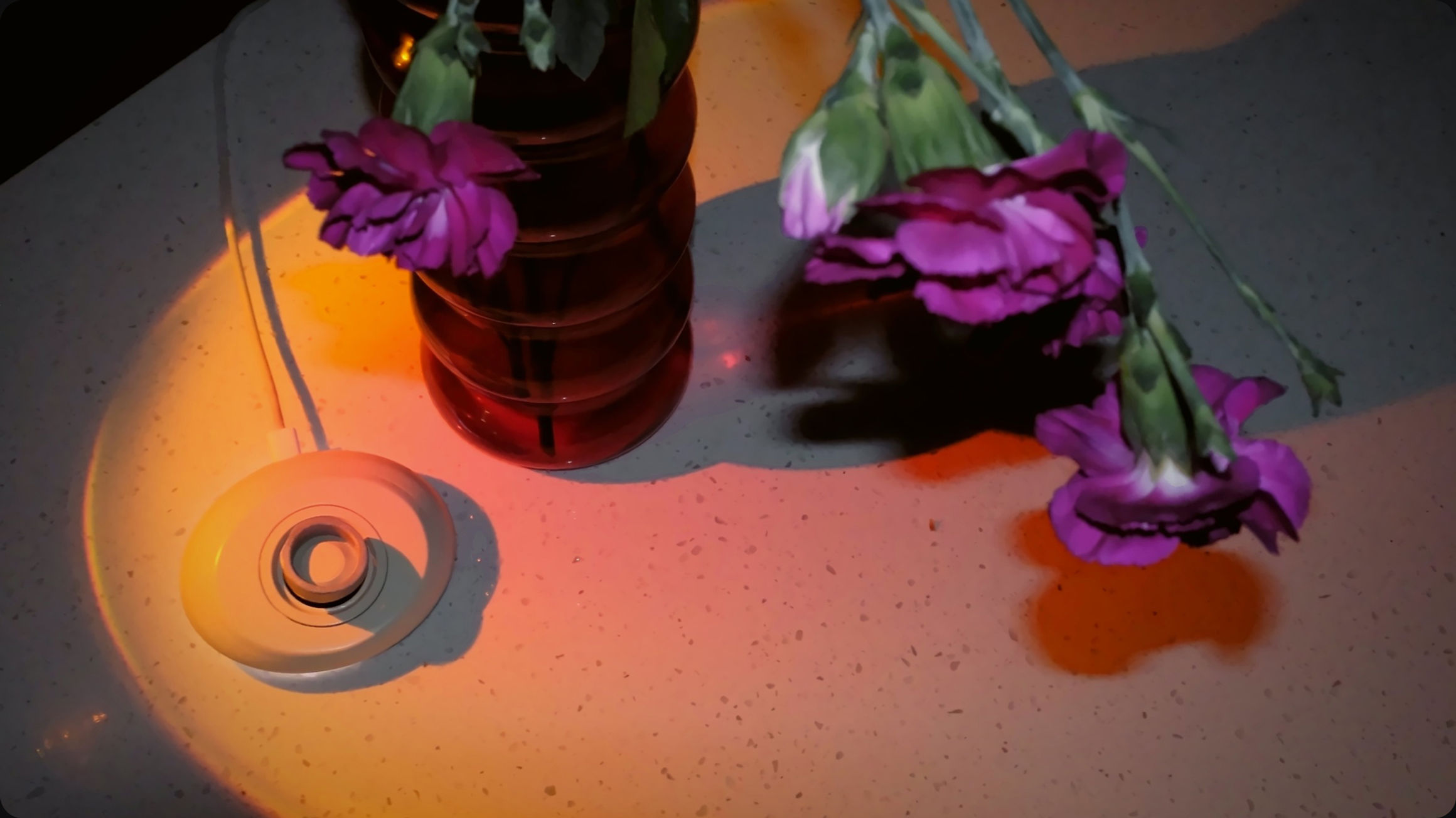
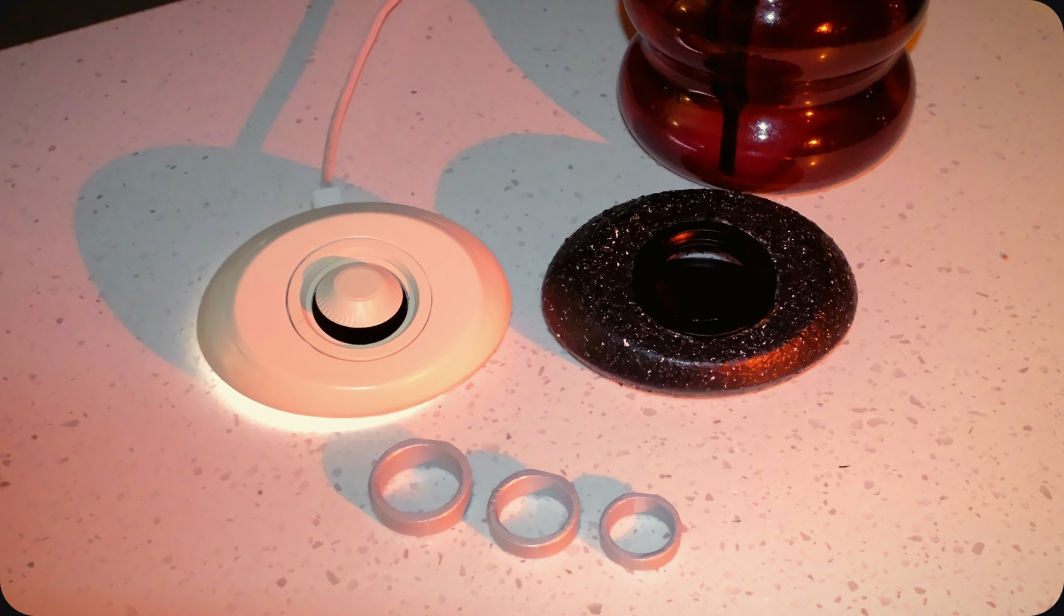
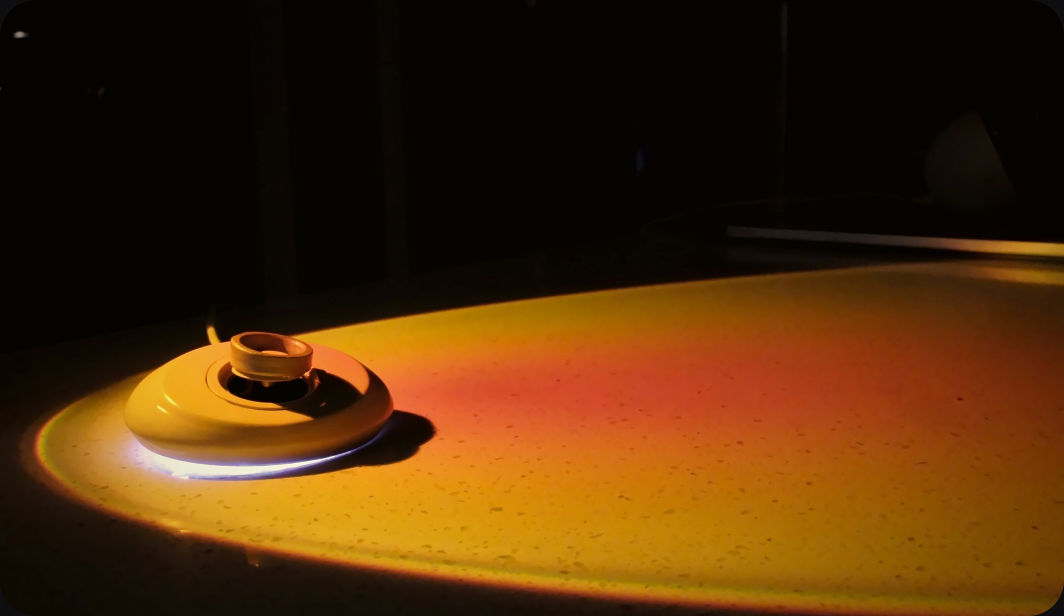
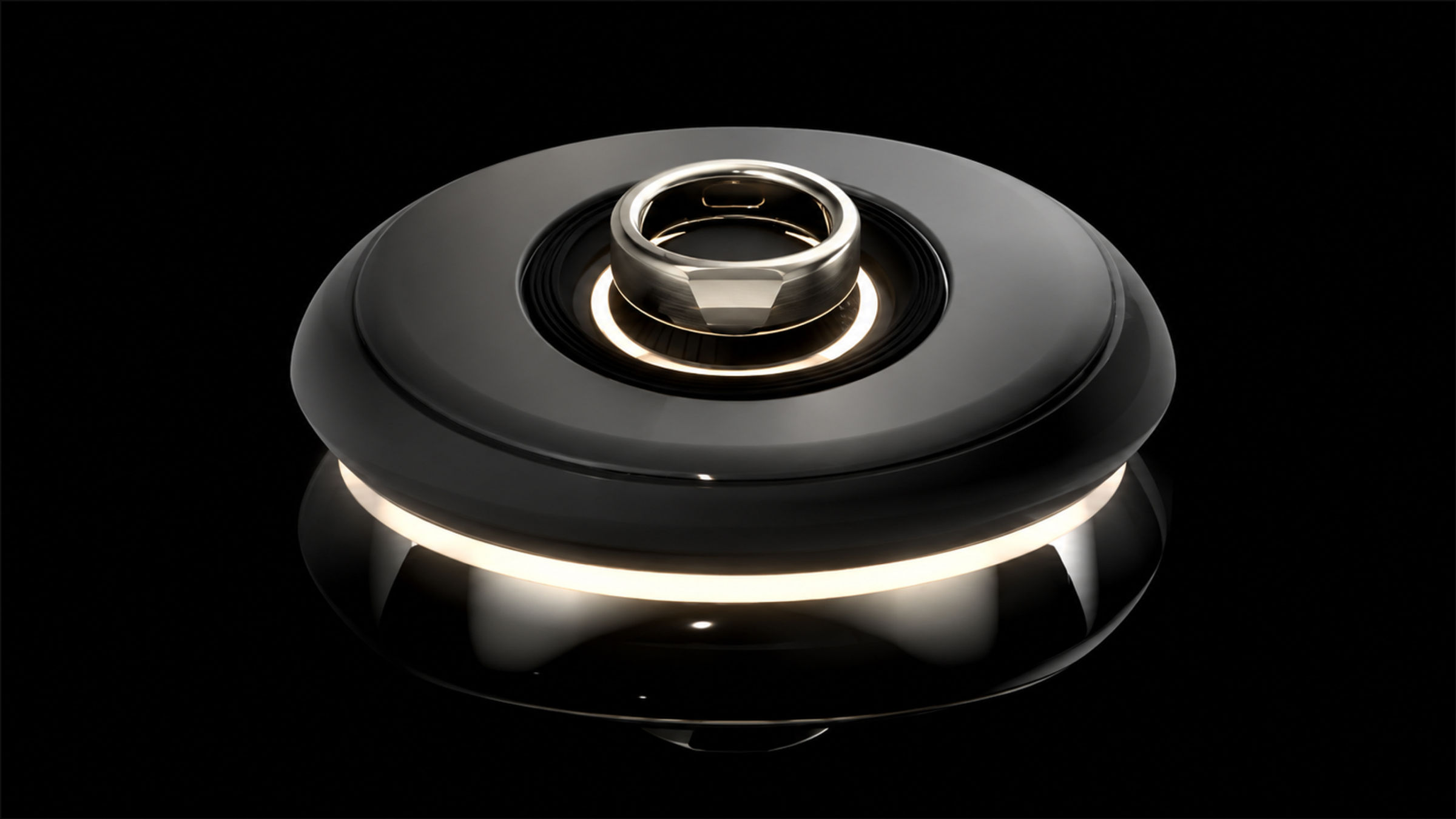
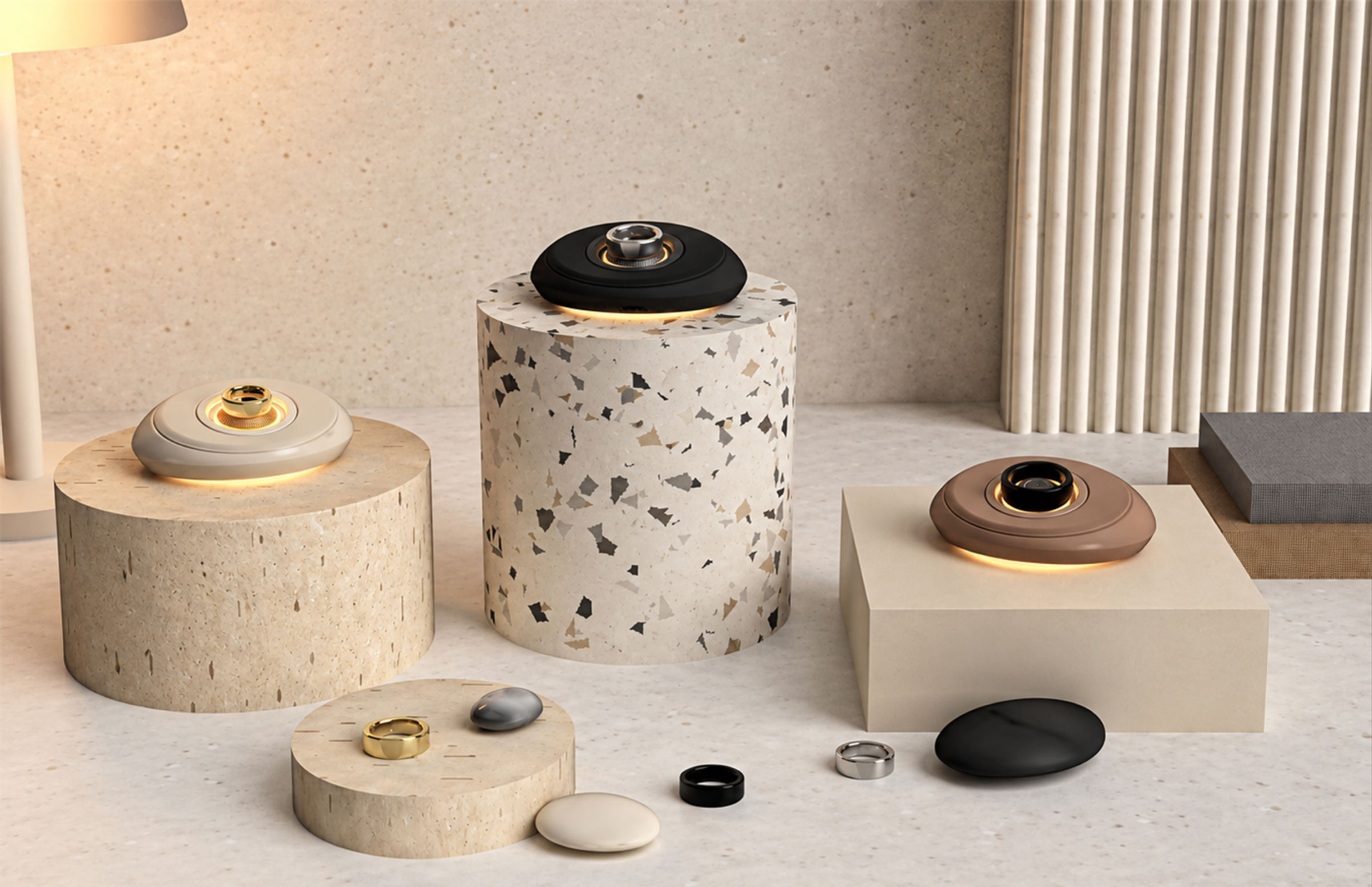
Set it up once, then put the phone away.
Pair the ring, add rooms, link your lights and choose how much Pebble notices. It isn’t needed day to day.

It speaks only when it has something to say.
The round screen inside the ring is the only display in the system, and every change waits for a touch.

Home, dock, turn, rest.
One evening with Pebble, in photos, renders and the dock UI.

Three measures, all past target.
I tested the final prototype against the goals I set at the start.

A family of quiet objects.
Same stone language, same ring, more rooms. The rule doesn’t change as it grows: Pebble suggests, you decide.